We are recommending Indigenous health studies become a mandatory part of the Ontario nursing curriculum, but we would be remiss if we didn’t first explore the courses already available within different nursing programs. This post will be dedicated to just that – looking at what Indigenous health courses are on offer at a sample of universities across the province. Just for fun, we will grade the universities based on their commitment to Indigenous health education.
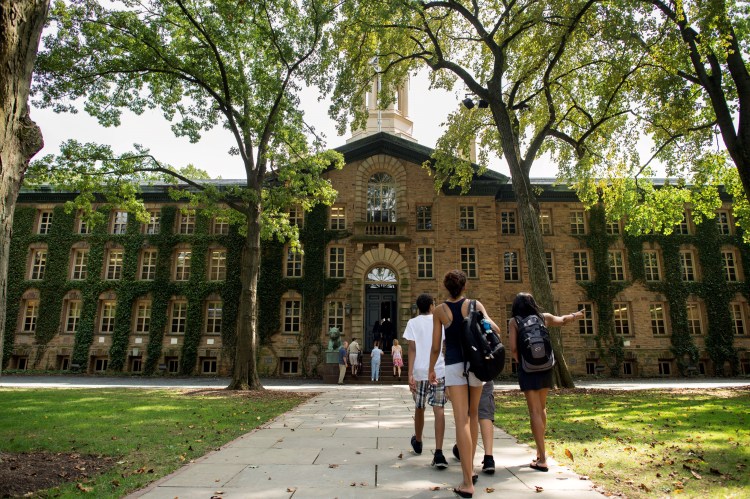
Our own school currently offers HH/NURS 4370 Indigenous History and Health as an elective option for 2nd entry and collaborative nursing students.

We would like to see the school doing more to promote Indigenous health studies within the nursing curriculum. We can’t even find a syllabus online for NURS 4370 so how are future students supposed to decide if they want to take that course? We also speak from experience when we say that our courses to date have done an abysmal job at covering Indigenous topics. We recall only ONE course, Professionhood II, which included a unit on “Rural and First Nations” nursing.
Perhaps we’re being a little harder on York because we are students here, but we give the school a C.

Trent University not only offers an elective Indigenous health studies course within its nursing curriculum (NURS-ERSC-INDG Indigenous Peoples Health and Environment), but in Fall 2018 the school introduced an “Indigenous Course Requirement”. All undergraduate students must complete at least 0.5 credit from the Indigenous course list. On the school’s website they explain they want students to have “a foundational understanding of the history, traditions, cultures, and knowledge of Indigenous peoples”. Further, this initiative ensures that “the institution remains a leader” in Indigenous education. For this, Trent gets an A+ because this is exactly what we’re recommending, only with a health focus.

Ontario Tech University (formerly University of Ontario Institute of Technology) in Oshawa allows upper year nursing students to take two “open electives” while completing their BScN. On the nursing program’s webpage there is no mention of available Indigenous health studies courses, which is a shame, because the school does offer such a course. We performed a simple search and found HLSC 3823 Health and Indigenous People in Canada. This course covers topics such as historic health practices, social and political determinants of Indigenous health, and the intersection of Indigenous knowledge and Western knowledge.
OTU deserves credit for offering an Indigenous health studies course but they should be doing more to promote it. For this reason, we’re giving OTU a grade of B-

Lakehead University is located in Thunder Bay (a 14.5 hour drive from Toronto!) The school claims their program places an emphasis on Aboriginal health and wellness studies in order to prepare future nurses working in northern/rural/remote settings, however, their course descriptions are pretty vague and we could not find any courses (compulsory or elective) with a specific Indigenous focus.
But for us, Lakehead shines because it offers a unique Native Nursing Entry Program. This program prepares Indigenous students wishing to complete the BScN program but don’t meet the requirements to enter directly into that program (i.e. have not completed high school). During the nine-month Native nursing entry program, students learn a mix of traditional and western medical practices, culturally appropriate care for Indigenous patients, and they get to complete a field placement in their own community or another Indigenous health care setting. Lakehead is making nursing education more accessible to Indigenous students, and for this we give them an A.

It’s worth mentioning that a number of schools unfortunately don’t appear to offer any courses in Indigenous health studies, including UofT, Queens, and the University of Ottawa. This is really disappointing as these are schools with a BIG presence and reputation.
In conclusion, some schools are doing a better job than others in offering Indigenous health studies courses. But as long as the subject remains (mostly) an elective rather than a mandatory part of the nursing curriculum, we believe we have a problem.
References:
Lakehead University. (2019). Nursing. Retrieved from https://www.lakeheadu.ca/programs/undergraduate-programs/nursing?gclid=EAIaIQobChMInPjn7sPq5QIVA8RkCh316wqQEAAYASAAEgK-h_D_BwE
Ontario Tech University. (2019). Bachelor of Science in Nursing. Retrieved from https://healthsciences.ontariotechu.ca/undergraduate/programs/bachelor-of-science-in-nursing/index.php
Trent University. (2019). Collaborative Program. Retrieved from https://www.trentu.ca/nursing/programs/undergraduate/collaborative-program
York University. (2019). 2nd Entry Bachelor of Science in Nursing (BScN). Retrieved from http://nursing.info.yorku.ca/2nd-entry-bachelor-of-science-in-nursing/


Interesting post. Some schools definitely need to follow the example set by others.
LikeLiked by 1 person
Very informative assessment. These courses should be mandatory, not an elective.
LikeLiked by 1 person