Barriers to adopting mandatory Aboriginal nursing courses

It has been well documented that Aboriginal communities across Canada suffer from some of the greatest health disparities in the country. Even though Aboriginal people have experienced health inequities for generations, very few nursing programs in Ontario require their students to complete a mandatory Aboriginal health course. Implementing mandatory Aboriginal health courses into nursing curriculum has been offered as part of a solution to educate and produce more culturally competent nurses. However, there are certain obstacles that must be addressed before Aboriginal courses become mandatory in nursing programs.

Retrieved from https://www.siteminder.com/r/hotel-distribution/hotel-direct-bookings/hotel-marketing-strategy-7-barriers-direct-bookings-remove/#

Barriers:

1.     In Ontario, the College of Nurses of Ontario (CNO) is responsible for implementing change to the nursing curriculum. In order to promote mandatory Aboriginal health courses in nursing curriculum, it would be important to target and work with the CNO. 

2.     A significant barrier is a lack of Aboriginal faculty members in nursing education. Aboriginal faculty would help to educate students in cultural competence as well as speak to their own lived experiences which could help further students’ understanding of Aboriginal health care. Additionally, increasing the number of Aboriginal faculty may also attract more Aboriginal students into the nursing profession. Furthermore, there seems to be a lack of policy and financial support to recruit Aboriginal faculty. Nursing programs across the province may need to increase their funding and support towards promoting and retaining Aboriginal faculty members.

3.     Awareness! It is important to continue to raise awareness and fight for health equity for Aboriginal communities. As nurses, we are taught the importance of advocating for vulnerable populations and therefore, we must continue to advocate for Aboriginal communities across the country.

References

Canadian Nurses Association. (2014, July). Aboriginal health nursing and Aboriginal health: Charting policy direction for nursing in Canada. Canadian Nurses Association, Aboriginal Nurses Association of Canada. Retrieved from: https://www.cna-aiic.ca/~/media/cna/page-content/pdf-en/aboriginal-health-nursing-and-aboriginal-health_charting-policy-direction-for-nursing-in-canada.pdf?la=en

College of Nurses of Ontario. (2018). Nursing Education Program Approval. Retrieved from http://www.cno.org/en/become-a-nurse/nursing-education-program-approval/

Rammohan, I. (2019, September 16). Why do Canada’s Indigenous people face worse health outcomes than non Indigenous people? The Varsity. Retrieved from https://thevarsity.ca/2019/09/15/why-do-canadas-indigenous-people-face-worse-health-outcomes-than-non-indigenous-people/
Indigenous Knowledge in Nursing Curriculum

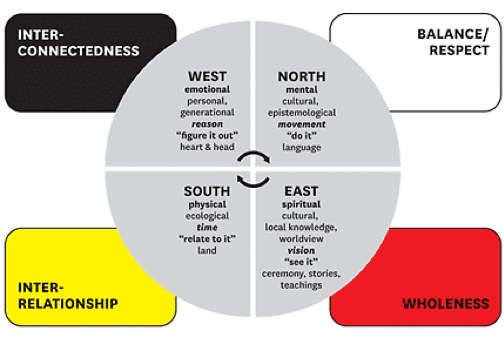
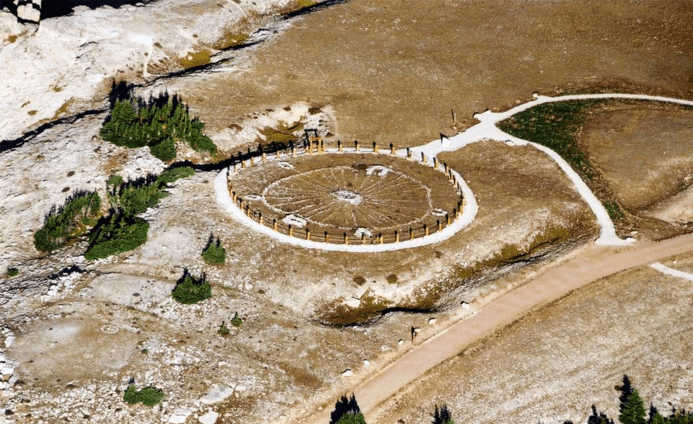
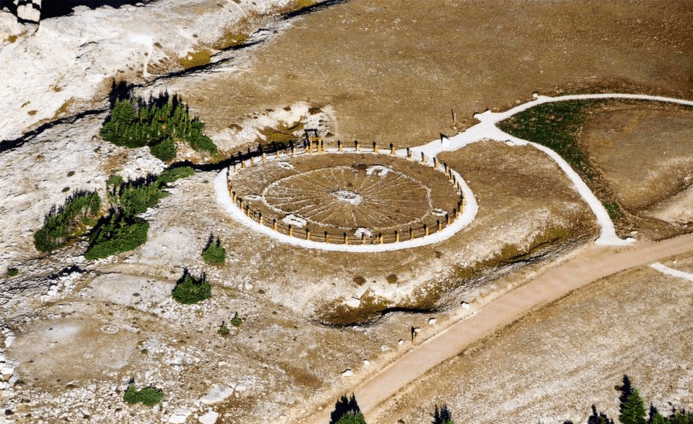
A recurring concept in indigenous culture that emerges is the medicine wheel. Its significance and meaning changes depending on the context and is unique to each indigenous culture however they all share an underlying unifying meaning of the importance of interconnectedness and interrelatedness of all things (Bell, 2014). The meanings can range from representing the stages of life (infant, youth, adult, elder), the seasons (spring, summer, fall, winter), the elements of nature (earth, sun, water, air), time of day (morning, afternoon, evening, night) or the aspects of life (mental, spiritual, physical, emotional) (Bell, 2014). Additionally, they can take on many forms through paintings, artifacts or physical construction such as the Bighorn medicine wheel in Wyoming which is one of the largest and well-known medicine wheels (Chapman, 2019).   

Bighorn Medicine Wheel


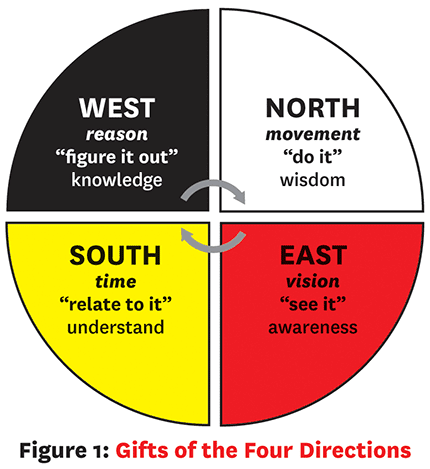
The medicine wheel drawing begins with a circle with four equidistant points representing the four directions of north, south, east and west with four different colours usually in black, white, red and yellow. These four directions have been used as a tool to gain greater understanding of non-physical things in our world. The medicine wheel can be used as a pedagogical tool for understanding, teaching and learning human journey from an individual level to a global or even cosmic scale. The medicine wheel includes the gifts of directions. In the East lies the gift of vision where one can “see”. In the South the gift of time allows one to relate to the vision. In the West one uses the gift of reason to figure out what they have seen. Finally, in the North one uses the gift of movement to actualize their vision. This reflects the learning process provided by the medicine wheel as each gift correspond to a particular process which include awareness, understanding, knowledge and wisdom (Bell, 2014).

Indigenous knowledge as exemplified by the medicine wheel include aspects of wholeness, interrelationships, interconnections, and balance/respect (Bell, 2014). One is required to look at the whole as greater than the sum of its parts and that the parts can only be recognized when the shape of the whole is seen. As nurses this is a relevant aspect as we should see our patients not by their physical processes that we treat but the patient as a whole. Interrelationships requires one to establish a relationship with all that surrounds us as well as our whole being including our physical, spiritual, mental and emotional aspects. Interconnections require one to recognize their environment and everything in it as something to be respected and revealing the dynamic interdependence of all objects in the universe. Balance provides structure for all the interconnections and interrelationships and the whole and respect is the appreciation of it all. The fundamental concepts of wholeness, interrelationship, interconnectedness and balance/respect are valuable for all including nurses.

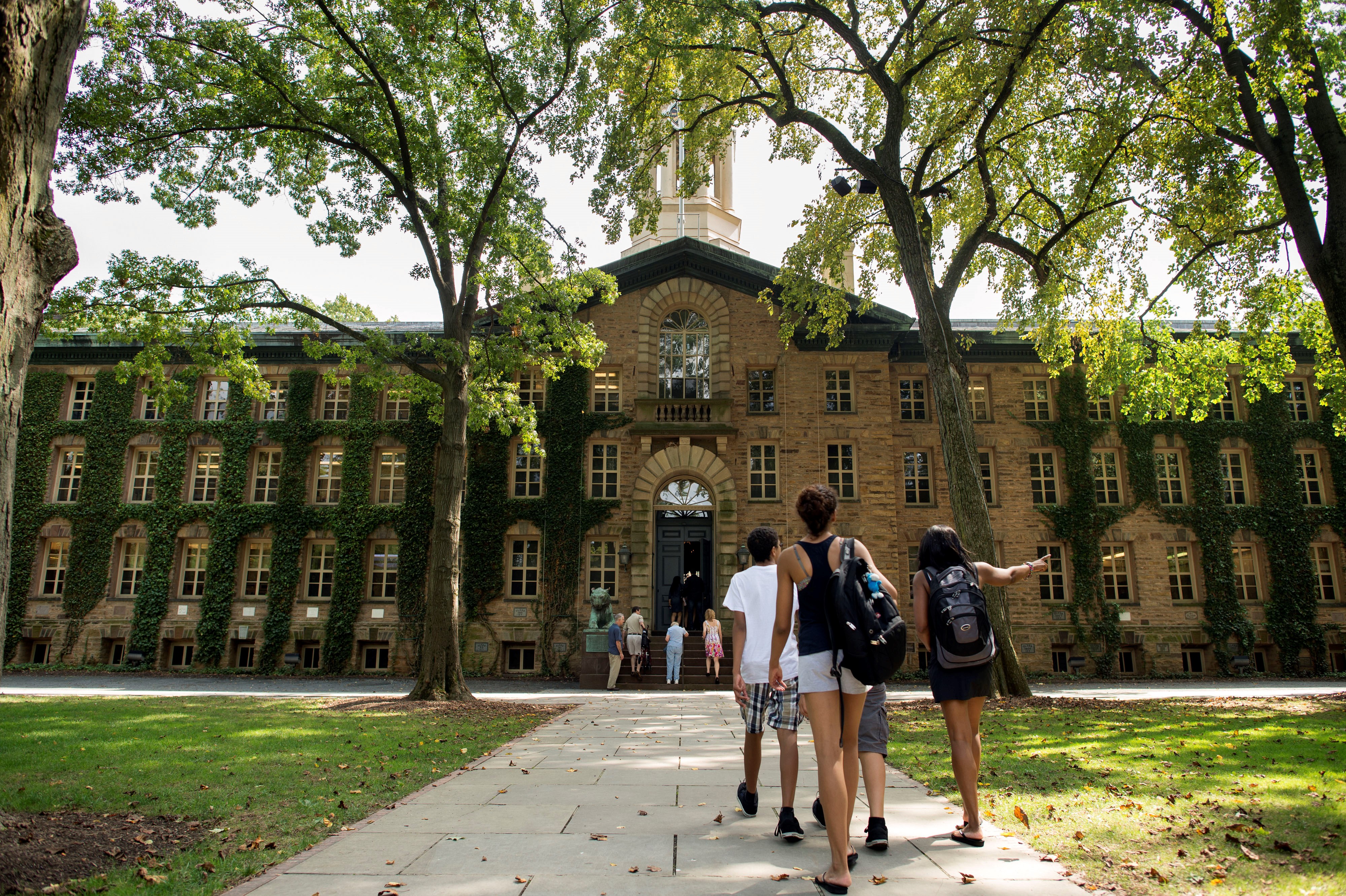
The teaching of indigenous ways of thinking such as the medicine wheel in nursing theory courses is absent at York University. Yet we see their value in providing one a holistic mindset in regard to healing as well as expanding one’s cultural competence. The inclusion of indigenous courses into Canadian nursing curriculum should be mandatory because the invisibility of Aboriginal health in nursing discourse may represent a subtle racism to an already marginalized and important cultural group. Additionally, it will further the profession by broadening the nursing body of knowledge, supporting cultural identity and promoting diversity within the nursing profession and better prepare graduates to provide care for all people.  

References

Bell, N. (2014). Teaching by the Medicine Wheel. EdCan Network. Retrieved from https://www.edcan.ca/articles/teaching-by-the-medicine-wheel/ 

Chapman, F. (2019). Medicine Wheel/Medicine Mountain: Celebrated and Controversial Landmark. In WyoHistory.org. Retrieved from https://www.wyohistory.org/encyclopedia/medicine-wheel

Joseph, B. (2013). What is the Aboriginal medicine wheel?. Retrieved from https://www.ictinc.ca/blog/what-is-an-aboriginal-medicine-wheel 

The Medicine Wheel and the Four Directions. (n.d). Retrieved from https://www.nlm.nih.gov/nativevoices/exhibition/healing-ways/medicine-ways/medicine-wheel.html

Thurston, J.M., & Mashford-Pringle, A. (2015). Nursing & indigenous education integration. Journal of Nursing Education and Practice, 5(10), 9-15. doi: 10.5430/jnep.v5n10p9

What is cultural competence & how will it enhance health care delivery to Aboriginal populations?

The nurse-patient relationship is one which can already be described as reflective of an uneven power dynamic in which the patient feels subjugated to the nurse, as the nurse possesses “more authority and influence in the health care system” (CNO, 2006, p. 4). When one adds cultural complexities into the mix, the dynamic can be said to be even more uneven. However, with proper acknowledgement of cultural complexities, cultural knowledge, and cognizance of the necessity to be competent in this realm can help greatly improve healthcare practice for both practitioner and patient.

The implementation of cultural competence through healthcare practices involves being able to recognize and respect the differences in values and beliefs between yourself, the health care provider, and the patient (Brunett & Shingles, 2018, p. 284). Furthermore, a health care provider must exercise an effort to alter care practices so that they align with the patient’s values and beliefs (Brunett & Shingles, 2018, p. 284).   (Excerpt from, “An Exploration of the Consequences of Opposing Views in the Nurse Patient-Relationship” By Nasrin Frotan.)     

Culturally competent care which entails exploration into the, “cultural, emotional, historical and spiritual,” dimensions of Aboriginal individuals’ reality, can be deemed as greatly beneficial in that it allows for more effective delivery of healthcare (Birch, 2009, p. 24). Care that essentially does not recognize cultural sensitivities leads to a situation within which an act performed by the healthcare provider can, “diminish, demean, or disempower the cultural identity and wellbeing of an individual (LoBiondo-Wood et. al, 2018, p. 515).”

By: Nasrin Frotan

Includes excerpts from, “An Exploration of the Consequences of Opposing Views in the Nurse Patient-Relationship” By Nasrin Frotan.

College of Nurses of Ontario, (2006) Therapeutic Nurse-Client Relationship, Revised, The Standard of Care

Birch, J. (2009). Culturally Competent Care for Aboriginal Women: A Case for Culturally Competent Care for Aboriginal Women Giving Birth in Hospital Settings. Retrieved from https://journals.uvic.ca/index.php/ijih/article/view/12323.’

Brunett, M., & Shingles, R. R. (2018). Does Having a Culturally Competent Health Care Provider Affect the Patients’ Experience or Satisfaction? A Critically Appraised Topic. Journal of Sport Rehabilitation, 27(3), 284–288. doi: 10.1123/jsr.2016-0123

LoBiondo-Wood, G., Haber, J., Cameron, C., & Singh, M. D. (Eds.). (2018). Nursing research in Canada: Methods, critical appraisal, and utilization (4th ed.). Toronto, ON: Elsevier Canada.

How does York measure up to other schools in offering Indigenous health studies courses? We’ll tell you.

We are recommending Indigenous health studies become a mandatory part of the Ontario nursing curriculum, but we would be remiss if we didn’t first explore the courses already available within different nursing programs.  This post will be dedicated to just that – looking at what Indigenous health courses are on offer at a sample of universities across the province.  Just for fun, we will grade the universities based on their commitment to Indigenous health education.

campus

Our own school currently offers HH/NURS 4370 Indigenous History and Health as an elective option for 2nd entry and collaborative nursing students.

York electives

We would like to see the school doing more to promote Indigenous health studies within the nursing curriculum.  We can’t even find a syllabus online for NURS 4370 so how are future students supposed to decide if they want to take that course?  We also speak from experience when we say that our courses to date have done an abysmal job at covering Indigenous topics.  We recall only ONE course, Professionhood II, which included a unit on “Rural and First Nations” nursing.

Perhaps we’re being a little harder on York because we are students here, but we give the school a C.

C

Trent University not only offers an elective Indigenous health studies course within its nursing curriculum (NURS-ERSC-INDG Indigenous Peoples Health and Environment), but in Fall 2018 the school introduced an “Indigenous Course Requirement”.  All undergraduate students must complete at least 0.5 credit from the Indigenous course list.  On the school’s website they explain they want students to have “a foundational understanding of the history, traditions, cultures, and knowledge of Indigenous peoples”.  Further, this initiative ensures that “the institution remains a leader” in Indigenous education.  For this, Trent gets an A+ because this is exactly what we’re recommending, only with a health focus.

A

Ontario Tech University (formerly University of Ontario Institute of Technology) in Oshawa allows upper year nursing students to take two “open electives” while completing their BScN.  On the nursing program’s webpage there is no mention of available Indigenous health studies courses, which is a shame, because the school does offer such a course.  We performed a simple search and found HLSC 3823 Health and Indigenous People in Canada.  This course covers topics such as historic health practices, social and political determinants of Indigenous health, and the intersection of Indigenous knowledge and Western knowledge.

OTU deserves credit for offering an Indigenous health studies course but they should be doing more to promote it.  For this reason, we’re giving OTU a grade of B-

B-

Lakehead University is located in Thunder Bay (a 14.5 hour drive from Toronto!)  The school claims their program places an emphasis on Aboriginal health and wellness studies in order to prepare future nurses working in northern/rural/remote settings, however, their course descriptions are pretty vague and we could not find any courses (compulsory or elective) with a specific Indigenous focus.

But for us, Lakehead shines because it offers a unique Native Nursing Entry Program.  This program prepares Indigenous students wishing to complete the BScN program but don’t meet the requirements to enter directly into that program (i.e. have not completed high school).  During the nine-month Native nursing entry program, students learn a mix of traditional and western medical practices, culturally appropriate care for Indigenous patients, and they get to complete a field placement in their own community or another Indigenous health care setting.  Lakehead is making nursing education more accessible to Indigenous students, and for this we give them an A.

A plain

It’s worth mentioning that a number of schools unfortunately don’t appear to offer any courses in Indigenous health studies, including UofT, Queens, and the University of Ottawa.  This is really disappointing as these are schools with a BIG presence and reputation.

In conclusion, some schools are doing a better job than others in offering Indigenous health studies courses. But as long as the subject remains (mostly) an elective rather than a mandatory part of the nursing curriculum, we believe we have a problem.

References:

Lakehead University. (2019). Nursing. Retrieved from https://www.lakeheadu.ca/programs/undergraduate-programs/nursing?gclid=EAIaIQobChMInPjn7sPq5QIVA8RkCh316wqQEAAYASAAEgK-h_D_BwE

Ontario Tech University. (2019). Bachelor of Science in Nursing. Retrieved from https://healthsciences.ontariotechu.ca/undergraduate/programs/bachelor-of-science-in-nursing/index.php

Trent University. (2019). Collaborative Program. Retrieved from https://www.trentu.ca/nursing/programs/undergraduate/collaborative-program

York University. (2019). 2nd Entry Bachelor of Science in Nursing (BScN). Retrieved from http://nursing.info.yorku.ca/2nd-entry-bachelor-of-science-in-nursing/

Raising awareness of the importance of incorporating mandatory Indigenous health courses in nursing curriculum

Image from shutterstock

What’s the issue?

  • In Canada, Indigenous people suffer from some of the greatest health disparities of any other population in the country. Their social determinants of health such as income, housing, employment, infrastructure, and education rank among the lowest in the country and have been compared to that of developing nations. Nevertheless, nursing programs across Ontario have yet to adopt mandatory indigenous courses as part of the nursing curriculum. 

Why aren’t these courses mandatory? 

  • A lack of recognition of the importance of cultural competence and cultural safety in nursing practice, especially in terms of Indigenous culture. Cultural competence: “a set of congruent behaviours, attitudes, and policies that come together in a system, agency, or among professionals, and enables [them] to work effectively in cross-cultural situations.” Cultural safety: “understanding power differentials inherent in health service delivery and redressing these inequities through educational processes.” 
  • Racism still exists in Canada. Historically from colonization, to the implementations of residential schools, to lack of support from our current government, racism contributes to the continual suffering and health inequities experienced by Indigenous populations.

What needs to be done?  

  • Further policy actions are needed to address systemic racism and the shortage of cultural competence and cultural safety.
  • Increase awareness and fight for change!
  • Need to continue to advocate for vulnerable populations in order to achieve health equity for all!

References:

CNA. (2014, July). Aboriginal health nursing and Aboriginal health: Charting policy direction for nursing in Canada.Canadian Nurses Association, Aboriginal Nurses Association of Canada. Retrieved from: https://www.cna-aiic.ca/~/media/cna/page-content/pdf-en/aboriginal-health-nursing-and-aboriginal-health_charting-policy-direction-for-nursing-in-canada.pdf?la=en

Rammohan, I. (2019, September 16). Why do Canada’s Indigenous people face worse health outcomes than non-Indigenous people? The Varsity. Retrieved from https://thevarsity.ca/2019/09/15/why-do-canadas-indigenous-people-face-worse-health-outcomes-than-non-indigenous-people/
Incorporating Indigenous Knowledge in Nursing Curricula: Recommendation for Change

. 

It is evident that now more than ever change is needed in nursing curricula to incorporate mandatory aboriginal health studies. Aboriginal persons of Canada continue to experience significant health disparities linked to social, historical, and contextual factors. The Canadian Association of Nurses (CNA) and the Aboriginal Nurses Association of Canada (ANAC) recognizes the need to address barriers associated to aboriginal health nursing and aboriginal health (CNA, 2014). I believe that student nurses should have the opportunity in nursing school to develop the knowledge required to provide culturally appropriate care. 

WHAT’S IN IT FOR US?

Providing culturally appropriate care can also benefit patients, health care providers, and health care systems. For instance, it has been reported that patients respond better when culture is considered in care and health care providers who learn cultural competence have increased confidence in their job and ability to address needs of diverse populations, higher job satisfaction is linked to increased employee retention rates in health care organizations (National aboriginal health organization, 2008) So, what can schools of nursing do to ensure students are developing culturally appropriate care in practice? I recommend that nursing schools incorporate mandatory aboriginal studies that place an emphasis on integrating Indigenous knowledge and ways of being. 

“Smudging is a cultural ceremony practised by a wide variety of Indigenous peoples in Canada and other parts of the world. Smudging is used for medicinal and practical purposes as well as for spiritual ceremonies. The practice generally involves prayer and the burning of sacred medicines, such as sweetgrass, cedar, sage and tobacco” (The Canadian Encyclopedia, 2018)
Image retrieved from: https://www.carrolup.info/the-meaning-of-healing/
Read more on indigenous smudging practice and issue in health care: Hospital asks forgiveness after Indigenous smudging ceremony forced outside into -20 C cold

Indigenous knowledge in nursing is defined as “traditional knowledge, oral knowledge, and indigenous knowledge along with literate knowledge. It also includes understanding First Nations, Inuit and Métis ontology, epistemology and explanatory models related to health and healing; and First Nations, Inuit and Métis cosmologies” (Minore et al. 2013, p. 7). Incorporating indigenous knowledge into curricula has the potential to enrich the relational aspect of nursing (CNA, 2014), student nurses can also learn to respect differences among traditional healing practices compared with current biomedical perspectives . We hope that by implementing indigenous knowledge into mandatory curricula we can begin to close the gap on barriers within schools and workplaces that fail to respect and employ indigenous knowledge currently.  

By: Rochelle Iyer

References

The Canadian Encyclopedia (2018) Retrieved from: https://www.thecanadianencyclopedia.ca/en/article/smudging

CNA. (2014, July). Aboriginal health nursing and Aboriginal health: Charting policy direction for nursing in Canada.Canadian Nurses Association, Aboriginal Nurses Association of Canada. Retrieved from: https://www.cna-aiic.ca/~/media/cna/page-content/pdf-en/aboriginal-health-nursing-and-aboriginal-health_charting-policy-direction-for-nursing-in-canada.pdf?la=en

Minore, B., Boone, M., Cromarty, H., Hill, M. E., Katt, M., Kinch, P., . . . Sabourin, A. (2013). Developing supportive workplace and educational environments for aboriginal nurses. Thunder Bay, ON: Centre for Rural and Northern Health Research, Lakehead University. 

National Aboriginal Health Organization. (2008). Cultural competency and safety: A guide for health administrators, providers, and educators. Ottawa ON: author 

Design a site like this with WordPress.com
Get started